Religious site
Mosteiro de São Bento (São Paulo)
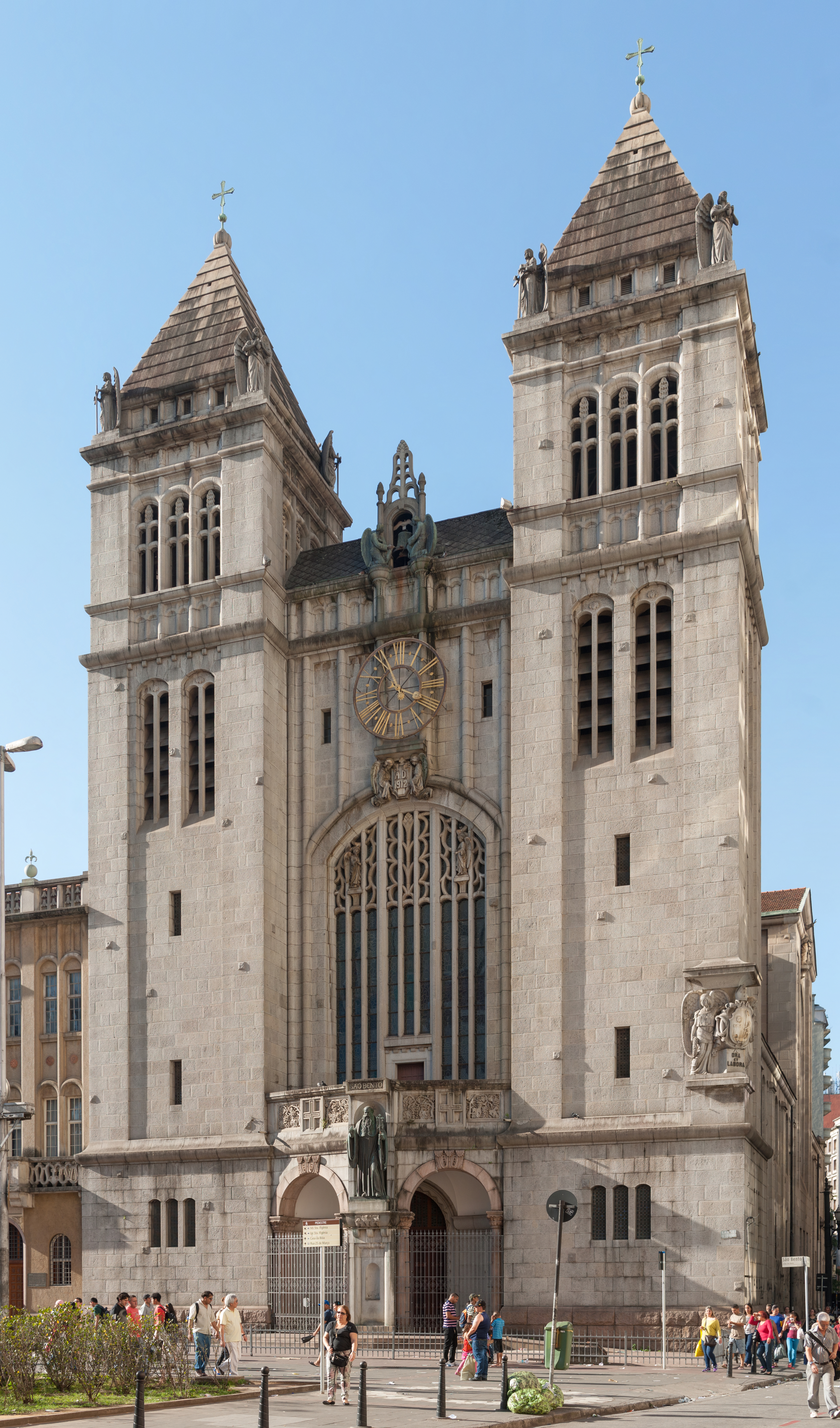 Wilfredor · Wikimedia Commons · CC BY-SA 4.0
Some booking links are affiliate links. If you book through them, we may earn a small commission at no extra cost to you. We never let this influence which places we recommend.
The Monastery of Saint Benedict (Mosteiro de São Bento) is a Catholic temple in São Paulo, Brazil, established on 14 July 1598. The current church, built between 1910 and 1914, follows the Neo-Romanesque style. Around 45 monks live here, following the ora et labora tradition. The Basilica of Our Lady of the Assumption, part of the monastery, holds daily Mass and the Divine Office with Gregorian chant.
Don't miss
- The high altar, made of marble from Italy's Lake Maggiore region.
- Clay sculptures of St. Benedict and St. Scholastica by Friar Agostinho de Jesus (1650), the first Brazilian sculptor.
- A Crucified Christ carved from cedar by José Pereira Mutas in 1777.
- The German-made clock (1921), once the most accurate in São Paulo, with a carillon of six tuned bells.
- The organ (1954) by the Walcker factory, with over 6,000 pipes, supported by oak columns carved by Heinrich Waderé.
- Stained glass windows designed by monk Adelbert Gresnicht, including The Evangelists at the entrance.
Tickets & tours
Ways to visit Mosteiro de São Bento (São Paulo)
You can visit Mosteiro de São Bento (São Paulo) on your own. A guide is worth it for the history and detail that is easy to walk past, and a tour can combine it with nearby sights.
 Cheapest way inVisit São Paulo with a local guide4.8★ · 130 travelers3-4 hoursFree cancellationFrom$26 per personSee dates →
 Best full daySão Paulo’s Full Day City Tour: Main City Sights – (Shared Group)4.9★ · 1,850 travelers~7 hoursFree cancellationFrom$79 per personSee dates →
 Private & flexibleWalking Tour São Paulo Center: Historical Process Of The Largest City in Brazil5★ · 24 travelers3-4 hoursFree cancellationFrom$113 per personSee dates →
Getting there
Know before you go
- Attend a Mass or the Divine Office with Gregorian chant, celebrated daily by the monks.
- The monastery sells cakes, breads, jams, and cookies made from centuries-old recipes.
- The library holds over 100,000 titles, including rare incunabula and tiny manuscripts; access is restricted to monks and students, but researchers can apply for special permission.
A bit of history
The monastery was founded by Friar Dom Mauro Teixeira, a disciple of Father Joseph of Anchieta, on land granted by Captain-Major Jorge Correia. In 1641, after the end of the Iberian Union, Amador Bueno retreated here to protect himself from popular fury after declining the title of King of São Paulo. The bandeirante Fernão Dias Pais sponsored a renovation in 1650 and was granted burial in the church chancel; his remains rest in the central nave. In the 19th century, a law extinguishing novitiates nearly ended the monastic community, but Abbot Dom Miguel Kruse revived it, founding the College of São Bento in 1903 and the School of Philosophy in 1908. The colonial church was demolished and the current building erected between 1910 and 1922.
Common questions
Can I visit the monastery?
Yes, the basilica is open to visitors. You can attend Mass or the Divine Office, and explore the church's interior.
What is the Beuron Art School style?
It's an aesthetic theory for religious art developed by Desiderius Peter Lenz, aiming to create contact between the faithful and God through ancient artistic principles. The monastery's interior decoration follows this style, designed by monk Adelbert Gresnicht.
Are there any original artworks from the old church?
Yes, the images of St. Benedict and St. Scholastica by Friar Agostinho de Jesus, the Crucified Christ by José Pereira Mutas (1777), and an 18th-century image of Our Lady of the Conception remain in the current basilica.
More attractions in Sao Paulo